
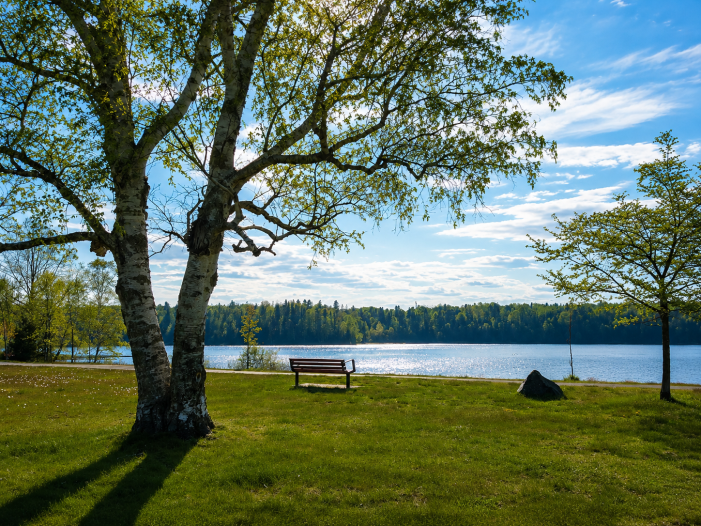

In Thunder Bay, my world is getting smaller.
Not because I have become fearful or because there is nothing to do, but because increasingly, the rewards of participating in the life of the community no longer outweigh the frustrations -or the potential risks.
Over the past several weeks, residents have witnessed the tragic recovery of a body at Boulevard Lake, reports of a runner attacked at Boulevard Lake, a vicious stabbing on Court Street, and countless other incidents that rarely make headlines but shape daily life in Thunder Bay. A friend recounted to me of her recent patronage at a local restaurant that as she was mid-bite through her cannelloni, she found herself gazing out the window at a man urinating on the sidewalk -just an arms reach beyond the glass.
Table with a view, Ma’am? In Thunder Bay? No thanks.
These incidents, different in nature, together produce the same outcome. People withdraw, stay home, avoid trails, skip events, and simply choose not to venture out. Residents can have compassion for people experiencing addiction, mental illness and homelessness while also expecting public spaces to remain safe, welcoming, and functional.
The City of Thunder Bay speaks endlessly about growth, vibrancy, and community participation. Yet many residents are experiencing the opposite.
And now, as engaging in community life becomes less appealing, the City -with the support of our elected representatives, have decided that some of the very spaces people still value should be developed.
For years, residents have pointed to Simpson Street, Brodie Street, Victoria Avenue, and other corridors in desperate need of investment. Entire blocks sit underutilized, lined by deteriorated buildings and vacant lots, tax revenues stagnating. These are the places that should be attracting the full attention of City Hall.
Instead, we find ourselves repeatedly debating development on land that is already providing value to the community.
Rather than fixing what is broken, the City is self-cannibalizing what is working -our healthiest and most vibrant components, parks, trails, and greenspaces.
The irony is difficult to ignore. City representatives have suggested that increased development and activity within park spaces may help address concerns related to crime, disorder, and social issues. If that is truly the strategy, then City Hall has effectively concluded that the answer to residents avoiding public spaces is to reduce public spaces.
That is not a solution but an admission of failure on the City’s part.
If people are retreating from parks because of disorder, the answer is to restore order. If people are avoiding trails because of safety concerns, the answer is to make them safer. If neighbourhoods are struggling, the answer is to revitalize them.
The answer is not to build over the few places people still enjoy using.
The message emerging from recent municipal decisions is unsettling: no public asset is permanent.
That message should concern every resident.
Councillors cannot claim to be surprised by the reaction. In 2023, Councillor Kasey Etreni brought forward a memorandum requesting a review of municipally owned lands that could potentially be declared surplus. In her memorandum, she included parkland inventory among parking lots and vacant land as land prime for development. At the time, it may have sounded like prudent asset management but today, residents are witnessing what that philosophy looks like in practice -the gradual and steady nibbling away of Thunder Bay’s parks and parkland.
In 2024, after direction to develop in parks and natural parkland, as initiated by Etreni’s memorandum, six neighbourhood parkettes were identified for potential housing development. Public opposition forced the City to retreat from several of those proposals, but the precedent had already been set. Residents were no longer debating whether parks should be protected. Instead, residents were now being asked to justify why parks should not be developed -and why they should even exist in the first place.
Yet even as residents mobilized to defend neighbourhood parks and greenspace, McKellar Ward Councillor, Brian Hamilton, publicly advocated for additional parkette locations to be considered for development. In June 2024, Hamilton submitted a memorandum lamenting the removal of parkettes from the surplus lands list, advocating for additional greenspace locations to be evaluated for future development.
For many residents, that signalled that opposition was not changing the conversation -the conversation had already been changed. Parks were no longer being treated as community assets first and development opportunities second- or never. Increasingly, they were being treated as development opportunities first.
When parkland is viewed primarily through the lens of disposal, development eventually follows. The larger debate is not really about one park, one parkette, or one development proposal, but whether City Hall still understands what residents value -or more to the point, whether or not City Hall even cares about what residents value.
For years, Thunder Bay community members have been told that revitalization matters. If City Hall truly believes that, then it should direct its attention to the corridors that need saving rather than the parks that do not.
Every time Council looks at a public park and sees a development opportunity, residents see something else entirely. They see one more reason why their world is becoming smaller.

