I walked out of Thunder Bay City Hall around 12:45 AM Wednesday wondering what, exactly, residents are supposed to do when they follow the process, read the reports, file Freedom of Information requests, examine the City’s planning documents, gather more than 2,600 petition signatures, show up at City Hall, sit through six hours of proceedings, put evidence directly in front of elected officials -and then watch much of that evidence disappear beneath arguments about immigration, tax revenue, how many other parks Thunder Bay has, and, remarkably, how attractive it would be to live in apartments built in the very parkland residents were trying to protect.

The public did show up. Before the meeting, concerned residents gathered outside City Hall carrying signs and asking Council to protect the Arundel parkland. Many more came inside and stayed for hours to watch the proceedings, where they encountered one of the stranger features of municipal democracy in Thunder Bay: a Council Chamber designed with a public gallery of only about two dozen seats. For this meeting, even those few seats were effectively unavailable to the broader public. With no fewer than 17 deputants appearing before Council, admission to Chambers was restricted to those waiting to speak, while everyone else filled chairs in the lobby, stood along the walls and watched their elected representatives debate the future of public land on a little television two floors below Council. There is something rather absurd about encouraging citizens to participate in municipal government while maintaining a Council Chamber that accommodates so few of them in the first place -and then, on a night of extraordinary public interest, restricting those few seats to speakers. Council may have been insulated from the crowd Tuesday night, but they should not mistake a public gallery strategically restricted to deputants for an absent public. There were a great many eyes on that room -including thousands more watching from outside City Hall.
After 17 deputations, Council voted to amend the Official Plan and rezone the Community Zone parkland at 791 Arundel Street for Terralux’s proposed 360-unit residential development. Councillors Andrew Foulds, Rajni Agarwal and Michael Zussino voted against it. The majority voted in favour. I expected to be disappointed if Council approved the development. I did not expect to leave City Hall wondering whether some members of Council had listened to the same six-hour meeting I had just attended.

The question residents had been asking for months was painfully simple: with the extraordinary amount of housing capacity already identified by the City, why does Thunder Bay need to sacrifice this public parkland? By the time Council voted Tuesday night, we had received plenty of commentary about why housing is good, why tax revenue is good, why immigration requires housing, why Thunder Bay has lots of parks, and why people enjoy living near nature. What remained strangely elusive was an evidence-based answer to the actual question.
The City had already supplied much of the evidence itself. On February 24, less than six months before Tuesday’s vote, Planning Services Supervisor Decio Lopes told the Growth Standing Committee that Thunder Bay’s vacant and underutilized lands could accommodate more than 20,000 homes, representing a 20-year supply of serviceable land for housing development of all sizes. The inventory included vacant urban and rural lands with existing road access, additional dwelling-unit opportunities, Opportunity Sites, and approved subdivisions. City-approved subdivisions alone contained approximately 750 lots capable of accommodating as many as 2,200 homes. Lopes even spared us the trouble of interpreting what all of this meant: “The issue is not whether land for housing exists; the challenge is activating these lands.”
One would think that statement might have been inconveniently memorable six months later.
That February meeting becomes even more interesting in hindsight because Councillor Kasey Etreni asked whether the City could find a way to “motivate developers” who were already holding parcels of land to start developing them. She spoke favourably about infill because existing infrastructure was already there. By August, Etreni was defending the conversion of Community Zone parkland and emphasizing that this was where Terralux wanted to build. I am prepared to accept, without further study, that Terralux would prefer to build on the land Terralux selected. That particular revelation required considerably less municipal expertise than most of the issues before Council Tuesday night. What remains unclear is why a private developer’s preference for public land became such an important consideration in deciding whether the public should continue to own and enjoy it.

Councillor Brian Hamilton eventually asked Development Services Director Joel DePeuter whether there were other locations where the Terralux apartments could be built. DePeuter acknowledged that there were, while explaining that those alternatives were not shovel ready. There it was: other land exists, but preparing it for development would require some work. This was particularly fascinating given what the City had told the public in February. Thunder Bay had more than 20,000 units of potential capacity, a 20-year supply of serviceable land, hundreds of approved subdivision lots and millions of dollars being invested to unlock still more development. The challenge identified by Planning Services was activating land and getting developers to build. Apparently one solution to the difficult work of activating appropriate development land is considerably simpler: sell the developer some parkland.

Ben Date put the larger housing numbers directly in front of Council Tuesday night. Drawing from the City’s Housing Land Needs Study, he pointed out that the City had identified capacity for 19,803 units while even its high-growth scenario projected a need for only 8,825 additional units through 2045. That leaves capacity for almost 11,000 units beyond the highest projected requirement, without relying on 791 Arundel. Date also pointed to the Central Avenue Development Lands, where infrastructure investment is intended to enable approximately 1,260 additional homes. I raised the same evidence in my deputation, along with other Opportunity Sites and the eventual redevelopment potential of the former Lakehead Psychiatric Hospital lands.
Those numbers should have been difficult to ignore. Council managed.
Councillor Dominic Pasqualino, for example, announced near the end of the meeting that he had done some research and Googled the combined acreage of destination parks such as Centennial, Trowbridge, and Chippewa. After residents spent months poring through planning documents, commissioned studies, environmental reports, Freedom of Information records and the City’s own housing data, we were treated to a last-minute Google search establishing that Thunder Bay has some other large parks.

This apparently deserved consideration in deciding whether to sacrifice Arundel. The City’s finding of roughly 20,000 units of housing capacity received considerably less enthusiasm. Perhaps 19,803 was simply harder to Google.
The logic behind the park-acreage exercise was troubling in its own right. Centennial exists. Trowbridge exists. Chippewa exists. Therefore, losing another piece of greenspace becomes easier to justify. Thunder Bay owns a great deal of public parkland, so presumably there will almost always be another park somewhere to point toward while the one currently wanted for development disappears. If that is Council’s emerging philosophy for managing public greenspace, residents across Thunder Bay might want to pay attention.
Mayor Ken Boshcoff travelled a similar road by returning to the 2024 Canadian City Parks Report, published by Park People, to emphasize Thunder Bay’s abundance of parkland. The report does indeed show that Thunder Bay performed exceptionally well among the municipalities participating: 85 per cent of its parkland was classified as natural area, the second-highest percentage in the report, while Thunder Bay ranked fourth for hectares of parkland relative to population, with 19 hectares per 1,000 residents. Those are impressive numbers.

The comparison group was 35 municipalities.
Statistics Canada counted 5,161 census subdivisions -municipalities and municipal equivalents -across Canada in the 2021 Census. The 35 municipalities supplying data to the Park People report represent approximately 0.68 per cent of that national number. Thunder Bay therefore ranked second and fourth among the municipalities participating in the report, an achievement worth celebrating without inflating it into something the report never claimed. More interesting was what Boshcoff seemed to believe the ranking established. Apparently doing well on a measure of natural parkland can become evidence that a city has enough to spare. I would have thought ranking near the top in something valuable might encourage a mayor to protect it. I stand corrected.

Councillor Andrew Foulds, arguing against the rezoning, observed somewhat tongue-in-cheek that nobody in the room should be ashamed that Thunder Bay has so much greenspace. It was a pointed remark after months of residents being called NIMBYs for trying to protect an urban greenspace, and an evening in which we had already heard about the acreage of destination parks such as Centennial, Trowbridge, and Chippewa as though they were somehow relevant substitutes for the parkland at Arundel. The irony was apparently too subtle for Councillor Trevor Giertuga, who promptly admonished Foulds: “Nobody said they were ashamed of greenspace. Nobody. Not once.” Giertuga was absolutely right. Nobody said they were ashamed of it. Residents were simply called NIMBYs for defending it, while destination parks elsewhere in the city were tallied up in defence of developing this particular urban greenspace. Then Giertuga voted to rezone it for development. I suppose we should be grateful the record is clear: he wasn’t ashamed of the greenspace when he voted to build on it. He was apparently quite proud of it. Just not quite proud enough to leave it alone.
Then there was the housing crisis, a phrase that has become the municipal equivalent of a master key throughout the Arundel debate. Need to justify selling parkland? Housing crisis. Concerned about environmental impacts? Housing crisis. Questioning infrastructure? Housing crisis. City study says there is capacity for almost 20,000 units elsewhere? Housing crisis.

Thunder Bay certainly has serious housing problems, particularly affordability, and nobody appearing before Council Tuesday needed a tutorial on the importance of building homes. CMHC’s latest Rental Market Survey places Thunder Bay’s primary rental apartment vacancy rate at 3.9 per cent. Availability and affordability are separate problems, and many people plainly cannot afford the housing that exists. Councillor Agarwal raised precisely this concern Tuesday and questioned the repeated portrayal of Thunder Bay as though the central problem were simply the absence of units. She also pointed toward the obvious question of what kind of housing Terralux intends to build (it’s market-rate if you are still wondering).
There is another inconvenient piece of Thunder Bay’s “housing crisis” story. During the City’s Opportunity Sites process, proposals from the Native People of Thunder Bay Development Corporation and Elevate NWO sought to build affordable housing, including transitional housing, on City lands. They were rejected. Reporting later confirmed that three non-profit bids for affordable and transitional units were turned down while the City advanced higher-density projects; City officials declined to discuss the rejected bids. This happened while Thunder Bay was falling spectacularly short of its own Housing Accelerator Fund affordability target: 362 net-new affordable permitted units were targeted. The City delivered 135. Council’s urgency Tuesday night was therefore remarkably selective. Thunder Bay apparently had room to reject affordable and transitional housing proposals when they weren’t dense enough, while a 360-unit predominantly market-rent proposal was urgent enough to justify rezoning public parkland.
Ben Date addressed the same issue directly. He acknowledged Thunder Bay’s need for affordable housing and described the repeated invocation of the housing crisis to defend Arundel as a red herring. Terralux’s development is predominantly market-rent housing. Thunder Bay needing more housing does not somehow transform 791 Arundel into the only place where 360 apartments can be built, particularly when the City has identified capacity for thousands upon thousands of units elsewhere. Date put the numbers on the table and asked Council, in substance, to connect the dots between a city-wide housing problem and the supposed necessity of sacrificing this particular greenspace. Apparently connecting those dots was optional.

Councillor Mark Bentz brought immigration into the discussion, emphasizing future newcomers and the housing they would require. There is nothing unreasonable about planning for population growth. There is something rather curious about leaning heavily on immigration as justification for permanently rezoning public parkland while Canada is deliberately reducing projected immigration levels. New temporary-resident arrivals are targeted to fall from 673,650 in 2025 to 385,000 in 2026, followed by 370,000 in both 2027 and 2028. New international-student arrivals are projected at 155,000 in 2026, roughly half the 305,900 anticipated under the previous plan, and permanent-resident targets have also been reduced. Ottawa has explicitly connected these changes to pressure on housing, infrastructure, and public services.
Of course immigration policy will change again. Governments change. Targets change. Economic conditions change. That is why cities commission professional population and housing projections rather than planning permanent land-use decisions around whatever federal immigration policy happens to exist this year. Thunder Bay did exactly that. Its own high-growth scenario still left almost 11,000 units of additional identified capacity beyond projected need. Bentz nevertheless managed to find hypothetical future residents who required Arundel more compelling than the actual housing-capacity study commissioned by the City he represents.
Hamilton’s environmental contribution was another highlight. He raised the environmental merits of building upward rather than outward, a perfectly sensible planning principle when applied to intensification in appropriate locations. He was using it to defend high-density construction on greenspace. I admit I had not previously encountered “save greenspace by building apartment buildings on it” as a conservation strategy, but municipal innovation apparently comes in many forms.

The irony becomes richer when the City’s own planning documents are brought back into the room. Lori Santink reminded Council that the provincial Growth Plan for Northern Ontario encourages significant future residential development in existing downtown areas, intensification corridors, brownfields, and strategic core areas. The City has vacant and underutilized properties, infill opportunities, approved subdivisions, and major development lands. If Council is genuinely interested in using density to reduce outward expansion, it has an impressive selection of places where that principle could actually preserve greenspace.
Santink spent much of her deputation doing something else that seemed increasingly unfashionable as the night wore on: reading the City’s planning documents and applying them to the proposal before Council. She walked through policies governing complete and connected communities, walking, cycling, transit and pedestrian access, then compared those aspirations with a car-dependent neighbourhood lacking sidewalks along Arundel and Hudson and even continuous sidewalks on Toledo. She raised compatibility, infrastructure, transportation, and scale, and reminded Council that 791 Arundel was designated Community rather than Residential. Council was literally being asked to amend the Official Plan because the existing designation did not accommodate what Terralux wanted to build. Somehow the developer’s proposal became the fixed object and the City’s planning framework became the thing expected to move around it.

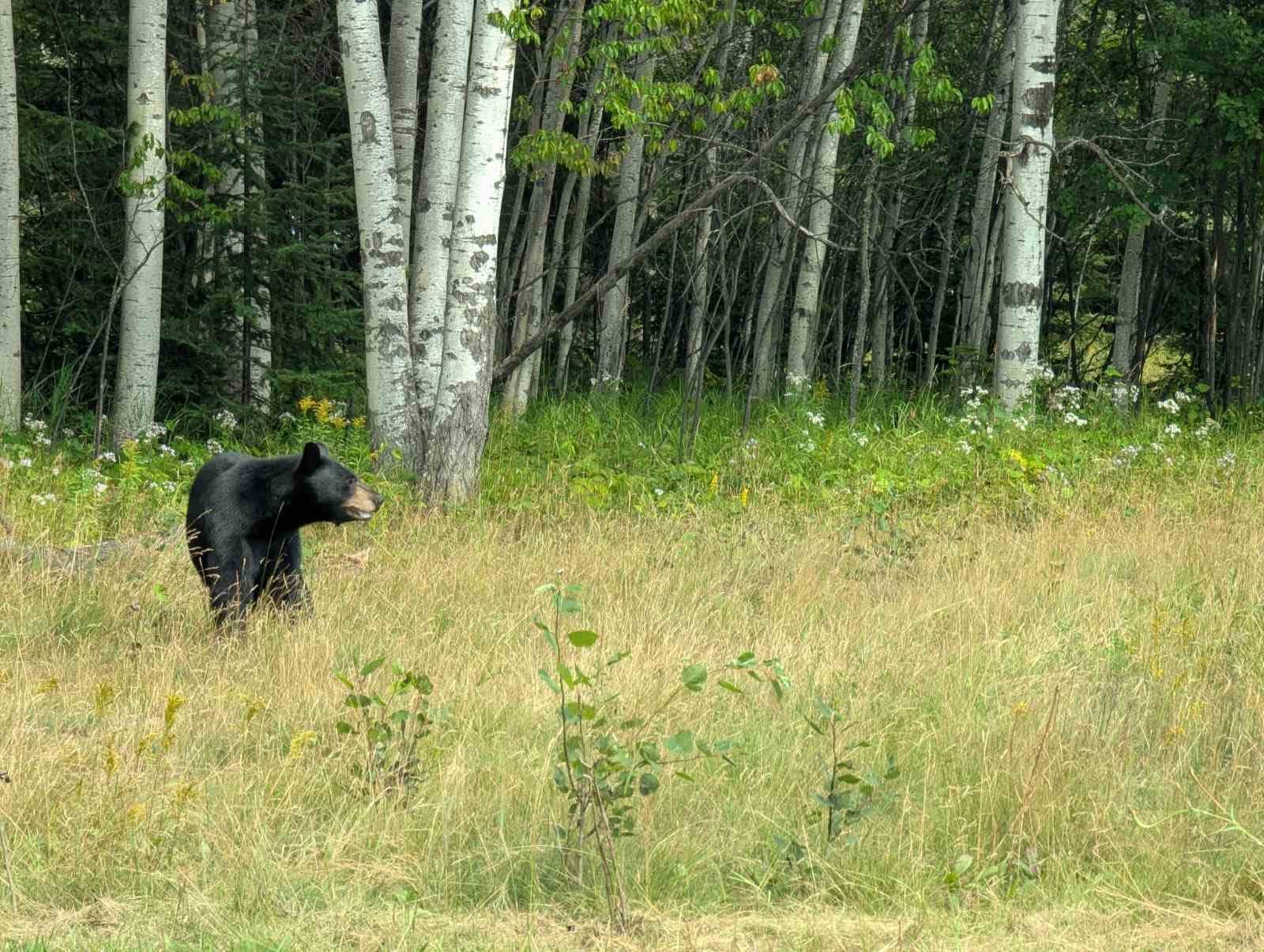
Dr. Harvey Lemelin then brought more than 33 years of research experience and more than 70 peer-reviewed publications, many involving wildlife management, into the discussion. He reminded Council that the City’s own Environmental Impact Study had already identified the possible presence of the Yellow-banded Bumble Bee and Canadian Warbler, while residents had documented Monarch Butterflies and Grey Foxes in the area. He explained that wildlife requires habitat and shelter along with food sources, and that habitat fragmentation and degradation are among the forces driving species loss. Video evidence of a grey fox using the Arundel property has been provided to the City, requiring further investigation before development proceeds.

That environmental evidence gave another deputant, Norman Sponchia, an especially pointed observation to make: he reminded Mayor Boshcoff that the Mayor serves on the Wilder Institute Ambassador Cabinet. The Wilder Institute describes its Ambassadors as advocates helping to build support for wildlife conservation and champion the protection of wildlife and wild places. Boshcoff remains listed among them.
I am still trying to reconcile the two versions of environmental leadership on display here. One involves belonging to an organization dedicated to wildlife and wild places. The other involves voting to rezone public greenspace containing wildlife habitat for private development. Perhaps the Wilder Institute should clarify whether “wild places” remain wild places once a developer takes an interest in them.
Boshcoff then produced one of the evening’s most extraordinary arguments. Current River residents, he suggested, enjoy the beauty and trails in this area, and future residents of the apartments would presumably enjoy those amenities too. He is absolutely correct that people want to live near beautiful natural spaces. Developers have known this for quite some time. Apparently Council’s contribution to this ancient real-estate insight is to sell part of the natural Boulevard Lake complex space so more people can enjoy living beside what remains of it.
It is almost elegant in its circularity. Arundel is valuable because it is surrounded by nature. Its natural surroundings make it attractive for development. Development therefore becomes justified by the attractiveness created by the greenspace being developed. If 755 Arundel eventually follows, perhaps future Council members can explain that residents of those buildings deserve to enjoy whatever remains after that.
And 755 is difficult to ignore. It is the adjacent Community Zone parkland between 791 and the Boulevard Lake trails. Santink raised the potential future access road shown toward that property and the conflicting explanations residents had received about whether it represented a realigned Lyon Boulevard or a new collector road. Foulds raised the larger concern Tuesday: develop 791, and 755 sits beside it, followed by the provincially owned former LPH lands already designated for future residential development. Residents have been told repeatedly to focus on 791. Unfortunately, roads have a habit of leading somewhere.
Then there was parliamentary decorum.
Throughout the evening, Mayor Boshcoff repeatedly called for parliamentary language from deputants. Before voting, he referred to opponents of the development as NIMBYs. Apparently the parliamentary dictionary has a special municipal edition.
The insult itself barely interests me anymore. NIMBY has been thrown around so freely throughout this process that it has become shorthand for “resident asking an inconvenient question.” What interested me was Boshcoff’s conclusion after 17 deputations dealing with planning policy, environmental impacts, infrastructure, traffic, public consultation, housing capacity, Freedom of Information records, and the City’s own studies. Somehow all that homework collapsed into a five-letter acronym.
It is certainly efficient. “NIMBY” takes considerably less time to say than “I have an evidence-based explanation for why 19,803 units of identified housing capacity are insufficient and therefore Community Zone parkland must be rezoned.”
Councillor Kristen Oliver thanked residents for their passion while offering little public engagement with the substance of the concerns that had occupied the previous six hours. Councillor Albert Aiello similarly offered little substantive discussion before supporting the development. Passion was an interesting word choice. Residents had brought studies, policy documents, environmental evidence, FOI records, housing statistics, and detailed planning arguments. Calling that “passion” is rather like thanking an accountant for being enthusiastic about arithmetic.
Zussino said little as well, although when the vote came he voted against the rezoning. Agarwal opposed it after raising concerns that included traffic, access, environmental impacts, and heritage, while Foulds challenged many of the planning, environmental and precedent concerns residents had been raising for months. Whatever one thinks of their individual reasoning, those three ultimately declined to authorize the conversion of the parkland.
The tax argument deserves its own place in this collection. Several councillors spoke about the property-tax revenue the development would generate, as though the municipal tax system operates only within the boundaries of 791 Arundel. Ben Date had prepared for this one too. Comparable residential development on the City’s enormous non-greenspace capacity would also produce assessment and property taxes. If the superior financial argument for developing public parkland is that parks currently pay no property tax, Council has stumbled upon an extraordinary new revenue strategy. Centennial Park pays no property taxes either. Neither does Trowbridge. Neither does virtually any municipal park. Once public value is measured against the tax assessment a developer could put in its place, every park starts looking financially irresponsible.
That is precisely why parks exist outside that calculation. Their value is public rather than taxable. They provide recreation, habitat, cooling, stormwater absorption, community space, trails, health benefits and a landscape that helps make neighbourhoods worth living in. Ironically, Mayor Boshcoff’s own argument about people wanting to live near Arundel’s beautiful trails demonstrated their economic value rather effectively. Apparently the park is valuable enough to increase the desirability of the development beside it, while simultaneously being insufficiently valuable to remain a park.
After all of this, I return to the question I put directly to Council Tuesday night. After months of attending meetings, reading reports, examining planning documents, and Santink’s filing of endless Freedom of Information requests, I asked what housing need the Arundel parkland solves that Thunder Bay cannot otherwise meet. The City had already identified roughly 20,000 units of capacity. Its planning supervisor had publicly said land availability was not the problem. Approved subdivisions could accommodate thousands of homes. Central Avenue is being opened for major residential development. Other Opportunity Sites remain. The former LPH lands will eventually add still more capacity. Even the City’s highest-growth projection did not come remotely close to exhausting the housing capacity already identified.
Tuesday’s vote therefore leaves me with something far more troubling than disappointment over losing a political fight. Residents did exactly what municipal governments endlessly tell citizens they want them to do. We became informed. We participated. We read the documents. We asked questions. We filed FOIs when the information was not readily available. Lori Santink brought Council its own planning policies. Dr. Harvey Lemelin brought decades of environmental research experience. Ben Date brought the City’s housing numbers. I brought the history of the process and the City’s studies, and other deputants brought still more evidence -each adding another layer to a case Council had been given every opportunity to understand. More than 2,600 residents signed a petition.
In return, we learned that Thunder Bay has other parks, immigrants may arrive someday, apartments pay property taxes, building up is apparently a wonderful way to protect greenspace even when the building is occurring on greenspace, developers prefer convenient land, and people enjoy living beside beautiful trails. We also learned that several months after City Planning told Council that Thunder Bay had more than 20,000 units of housing capacity and that “the issue is not whether land for housing exists,” the existence of all that land somehow failed to protect 791 Arundel.
I can accept losing an argument when the stronger evidence wins. I am still waiting to see the stronger evidence from Tuesday night.
Thunder Bay needs housing. The City has said so. Thunder Bay needs to get developers building. The City has said that too. Thunder Bay has more than 20,000 units of potential capacity and a 20-year supply of serviceable land for housing development of all sizes. Again, those are the City’s words and numbers.
Six months ago, Decio Lopes told Council exactly what the problem was: “The issue is not whether land for housing exists; the challenge is activating these lands.”
Council could have tackled that challenge. Selling the park was easier.
Council may have voted, but they would be mistaken to think this is over. We still have weapons in our arsenal. We’re still here. And we’re not done.