
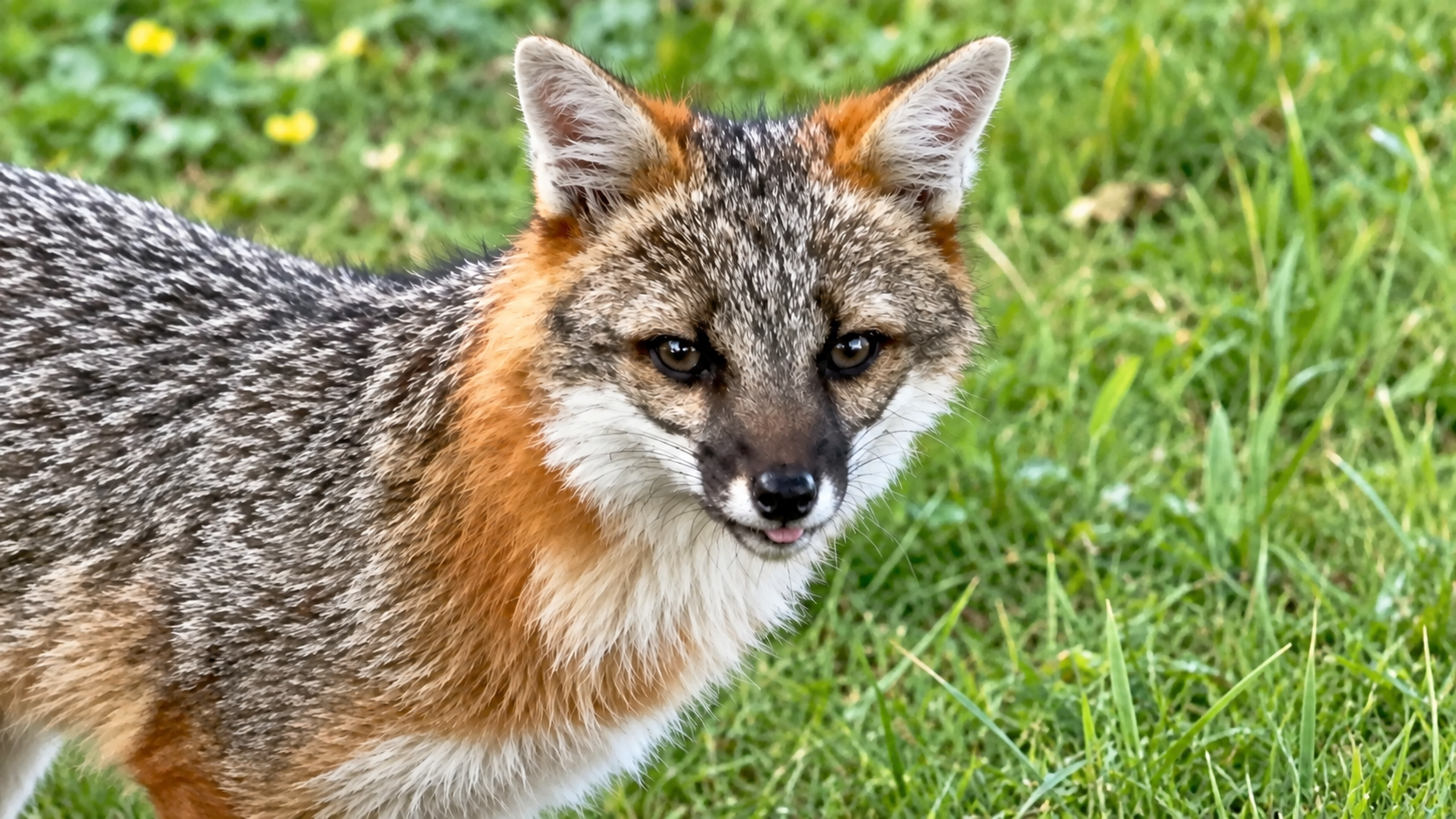

There are believed to be fewer than 110 mature Grey Foxes in Canada. Remarkably, just under 50 are estimated to comprise the northwestern Ontario subpopulation extending from Rainy River to Thunder Bay -almost half of Canada’s estimated mature population concentrated in this vast corner of the province.
The Grey Fox is listed as Threatened in Ontario and federally under Canada’s Species at Risk Act. Evidence also tells us these aren’t simply occasional visitors wandering across the border. Northwestern Ontario supports what provincial recovery planning describes as strong evidence of a breeding subpopulation, and federal recovery planning specifically identifies maintaining that population and supporting its natural increase in abundance and distribution as important to the recovery of Grey Fox in Canada.
There should be some honour in living in a place like that. There should also be responsibility.
Thunder Bay occupies part of one of the few landscapes in Canada where this beautiful and remarkably rare creature appears to be holding on and, perhaps, reclaiming territory. We have the forests and connected greenspaces that make that possible. We also have residents increasingly documenting Grey Foxes across the city, from its north end to its south end, with photographs and videos appearing on social media and being shared among neighbours.
Rather than treating those sightings as an ecological curiosity, perhaps we should recognize what they represent. Thunder Bay has the distinct privilege of contributing to the recovery of a threatened Canadian species simply by being a responsible steward of the land and wildlife already here.
Unfortunately, stewardship seems to have become considerably more complicated now that a Grey Fox has wandered into the path of a development proposal.
Because there is one place where the sightings are becoming particularly difficult to ignore -the connected greenspace surrounding Arundel Street and Boulevard Lake.
And residents have receipts.
What Does a Grey Fox Need?
It is worth understanding why those Grey Fox sightings raised immediate concerns about Arundel.
Ontario describes Grey Fox as a species that uses a variety of habitats but tends to favour forested areas, particularly landscapes containing a mixture of forest and open areas. Habitat connectivity is considered important to the species’ continued dispersal and recovery.
Grey Foxes also need shelter. They use dens to raise their pups and to rest, and Ontario identifies tree hollows, rock crevices, wood and brush piles among the features they may use for denning. Dens are generally found in dense brush with a water source nearby. Ontario’s recovery planning calls for maintaining or enhancing suitable habitat and habitat connectivity while filling significant knowledge gaps about the species’ habitat use and movements.
Read that description ^^^while thinking about Arundel and Boulevard Lake.
The Province also identifies continued conservation and stewardship of forests in areas occupied by Grey Fox as important to ensuring suitable habitat remains available for the species, particularly here in northwestern Ontario.
And there is a legal reason to take the possibility of a Grey Fox den seriously. Ontario’s species-at-risk legislation changed substantially this year. The Species Conservation Act, 2025 came into force on March 30, 2026 and now defines animal habitat more narrowly than the legislation it replaced. For an animal, protected habitat can include a dwelling place -such as a den, nest or similar place, that is occupied or habitually occupied for breeding, rearing, staging, wintering or hibernating, together with the immediately surrounding area essential to those functions.
A documented Grey Fox sighting beside Arundel should trigger serious attention to how the species may be using the surrounding forest. Evidence of denning, breeding activity or other habitat protected under Ontario law could significantly affect what can proceed on the site. The City’s own Joel DePeuter acknowledged as much when he told Northern Hoot that “any disturbance of protected habitat will not be permitted until identified regulatory concerns have been appropriately addressed.”
Which makes knowing what is actually happening in this forest rather important before anyone starts removing it.
Ontario’s Grey Fox recovery policy goes considerably further than simply telling us not to disturb a den. The government’s recovery goal is to support natural increases in abundance and distribution by filling knowledge gaps, reducing threats and “maintaining or enhancing suitable habitat and habitat connectivity.”The Province identifies research into population size, breeding status, habitat use and movement as a high-priority recovery action and encourages continued conservation and stewardship of forests in areas occupied by Grey Fox, including northwestern Ontario.
That is exactly the sort of knowledge we are currently missing at Arundel.
And the timing could hardly have been more important.
Where the Grey Fox Meets Terralux
For readers who haven’t been following the long-running Arundel controversy, 791 Arundel Street is City-owned parkland in Current River, beside Boulevard Lake and surrounded by a much larger connected forest and parkland system.
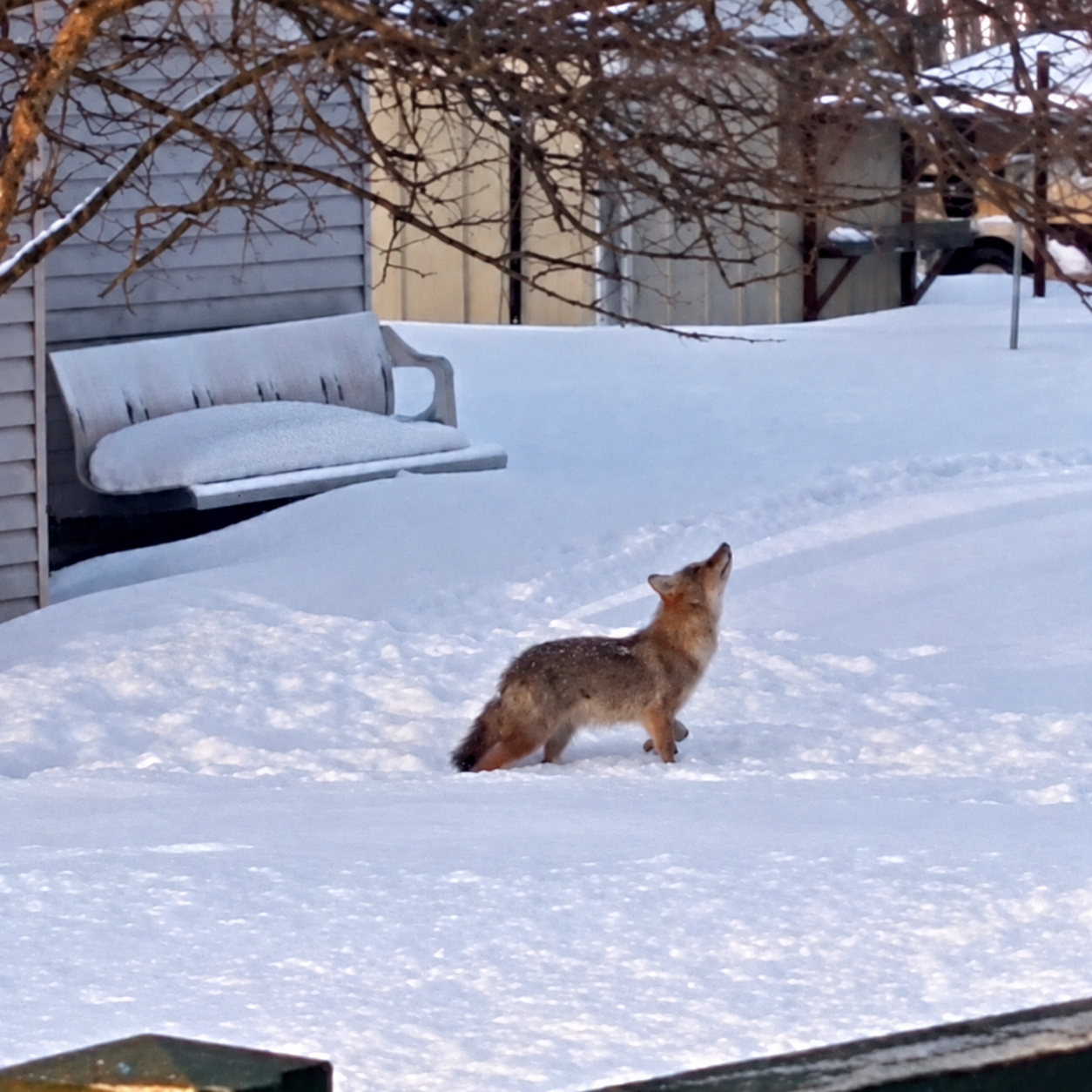
The City selected the property for residential development and ultimately chose a proposal from Terralux for two seven-storey apartment buildings containing approximately 360 residential units. On August 11, Thunder Bay City Council voted to approve the planning changes required to allow the development to proceed.
Among the environmental work completed in connection with the proposal was a Scoped Environmental Impact Study, or EIS, for 791 Arundel.
The EIS was prepared by biologist Allan Harris of Harris Ecological Consulting. Its purpose included examining the property for environmental features, Species at Risk and their habitat and Significant Wildlife Habitat. The final report is dated July 22, 2026, although Harris conducted his primary ecological site assessment almost two years earlier, on August 12, 2024.
The study became part of the environmental information before the City as it considered the Terralux proposal.
But the 791 Arundel parkland doesn’t exist by itself.
Beside it is the 755 Arundel parkland. Around both properties is existing parkland and forest connected to Boulevard Lake and Centennial Park. Harris’s own EIS describes the forest at 791Arundel as continuous with the much larger forested landscape surrounding Boulevard Lake and Centennial Park and extending north toward Highway 11/17.
The proposed development therefore places the future of at least part of that connected landscape directly before the City at precisely the time residents are documenting a Threatened Grey Fox around it.
At this point, nobody knows precisely how Grey Foxes are using the Arundel and Boulevard Lake landscape -whether they are simply travelling through, regularly using the forest for food and shelter, or denning somewhere within the connected greenspace. Until recently, there had been little reason for anyone to look closely enough to answer those questions. The proposed development and numerous sightings of the Grey Fox all around the Boulevard Lake greenspace complex change that.
With credible photographic and video evidence now placing Grey Foxes around the Arundel and Boulevard Lake greenspace, there is an obvious question demanding an answer: what role, if any, does this connected forest play in supporting them?
That question becomes considerably more urgent when the landscape we’re talking about isn’t hypothetical habitat somewhere deep in the boreal forest. Part of it has already been approved for development.
A Grey Fox in the Middle of Arundel
Lori and Nick Santink live on Toledo Street, immediately beside the Arundel greenspace. On March 30, 2026, a Grey Fox appeared on their deck, and they captured it on video.
Their evidence wasn’t sent to the City as a novelty or because somebody thought City Hall needed a cute wildlife video. The sighting was significant because their Toledo property sits directly beside the Arundel lands, where part of this connected forest is proposed for development. If a Threatened Grey Fox was appearing immediately beside that forest, residents wanted to know whether it was also using the land about to be altered.
Lori and Nick’s video was provided to Current River Councillor Andrew Foulds, who forwarded it to City staff. They also provided their evidence to the Thunder Bay Field Naturalists’ Grey Fox Project.
Their sighting isn’t alone.
My son saw a Grey Fox this summer while jogging around Boulevard Lake. I saw one myself near the pickleball courts at Boulevard Lake. Other residents have reported sightings around Current River, while photographs and videos from elsewhere in Thunder Bay -including both the north and south ends, continue appearing on social media.
Now look at a map.
Toledo Street sits along the western edge of the Arundel greenspace. Boulevard Lake lies immediately to the east and southeast. Between and around those locations are the 791 Arundel parkland, the neighbouring 755 Arundel parkland and the broader connected forest and parkland around Boulevard Lake.
Taken together, the sightings begin to draw a rather compelling circle around the Arundel and Boulevard Lake greenspace. They raise obvious questions about how Grey Foxes are moving through this landscape -where they travel, feed, rest and find shelter, and whether the connected forest forms part of a larger home range.
When one of Canada’s rarest mammals keeps turning up around the edges of a forest we’re preparing to develop, surely the reasonable response is to become intensely curious about what is happening in the middle.
Residents did.
Eventually, so did the City.
And a word here for anyone who reads this and understandably wants to help: please don’t head into the Arundel forest looking for a Grey Fox den. Don’t start moving through dense brush, poking around hollow trees or placing trail cameras wherever you think a fox might be. A den or other regularly used shelter could be important to the animal and potentially significant under provincial species-at-risk law. The objective is to document Grey Foxes, not disturb them. Photograph or record incidental sightings from a respectful distance, note the location and time, and report them to the appropriate experts. Let qualified people conduct the investigation.
Further Investigation -While Everything Else Keeps Moving
Following the evidence provided to the City, I asked Development Services Manager Joel DePeuter what was being done.
His response confirmed something important:
“Further investigation is intended based on information indicating that grey foxes have been sighted in the area.”
DePeuter continued:
“The City will be working with Harris Ecological Consulting to determine the appropriate course of action and scope of work, including whether investigations beyond the subject property are necessary.”
Then came this:
“Development approvals, such as Site Plan Control, may proceed independently of the environmental investigation. However, any disturbance of protected habitat will not be permitted until identified regulatory concerns have been appropriately addressed.”
And there, in two paragraphs, sits much of my concern.
The City acknowledges that new evidence warrants further investigation. The scope hasn’t been determined. We don’t yet know which professionals will undertake the work, whether the investigation will extend into the surrounding Arundel and Boulevard Lake greenspace, or what that investigation will involve.
The development approval process, meanwhile, can continue.
Perhaps that’s simply how municipal planning processes work. From where I sit, however, everything associated with moving this development forward appears capable of proceeding with remarkable efficiency while determining whether a Threatened species is using this forest seems permitted a more leisurely pace.
When I asked whether Harris Ecological Consulting had been retained to undertake the new investigation and whether someone independent of the original environmental assessment might review the Grey Fox evidence, DePeuter clarified:
“As a first step, the City will be consulting with Mr. Harris to determine what further investigation may be required. The scope of the investigation and the professionals who may be involved have not yet been determined.”
That brings us back to the environmental assessment the City already has.
How Much Can You Learn From One Walk Through a Forest?
The July 2026 Scoped Environmental Impact Study for 791 Arundel was prepared by Allan Harris of Harris Ecological Consulting.
Harris is an experienced northern Ontario biologist with more than 35 years in the field. His credentials are substantial. Questioning the adequacy of an environmental study doesn’t require pretending the person who conducted it doesn’t know what he’s doing.
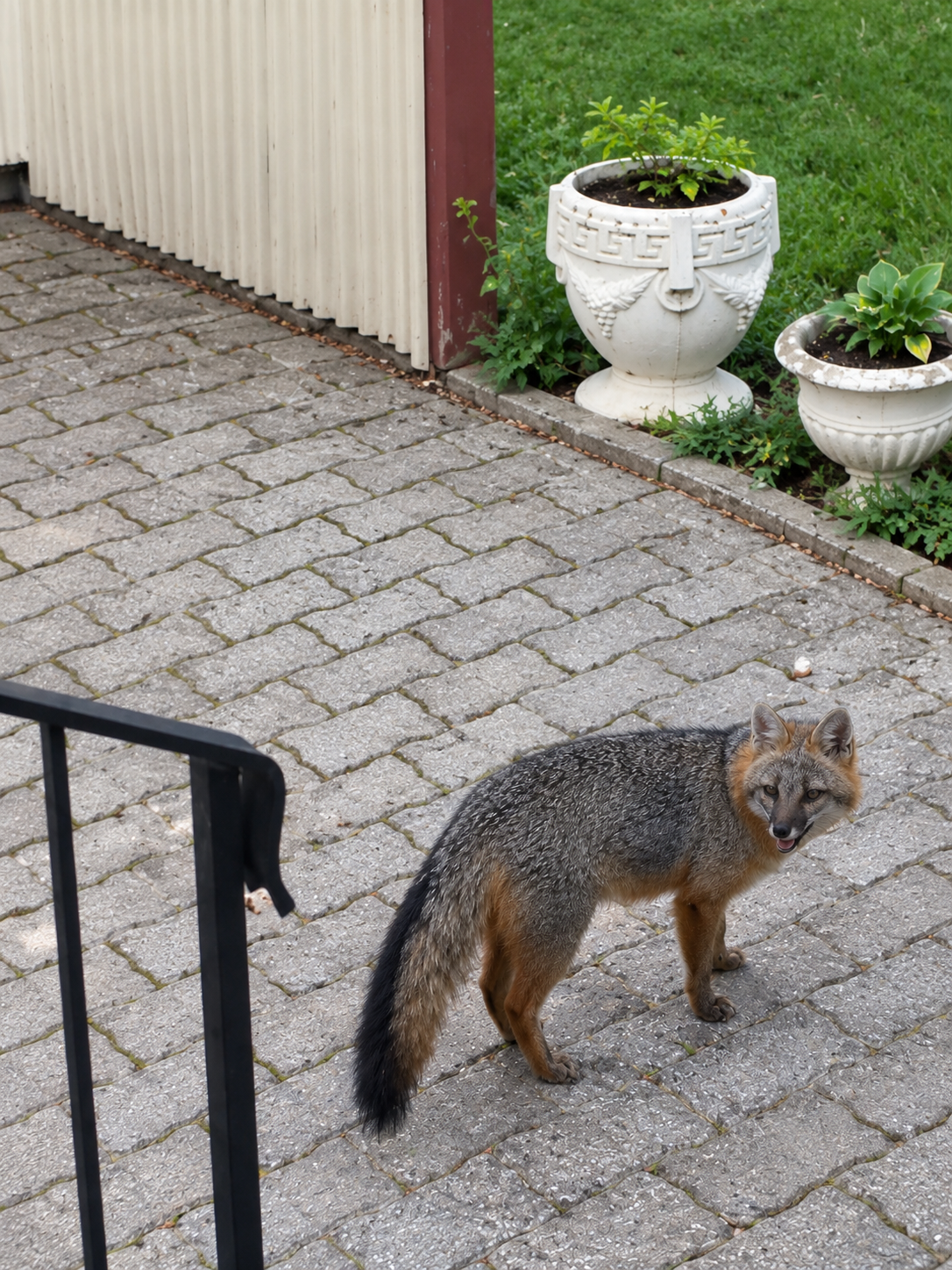
The methodology, however, deserves scrutiny.
According to the EIS, Harris conducted an ecological site assessment on August 12, 2024. He described the work this way:
“I walked the property and examined soils, vegetation, aquatic and terrestrial habitat conditions, and surface drainage features. I looked for Species at Risk and their habitat and Significant Wildlife Habitat…”
Harris returned on July 17, 2026, but the EIS describes that visit as being conducted to assess property boundaries.
The methodology described in the report therefore includes one ecological site assessment, conducted on one August day, supplemented by searches of available natural-heritage information and databases. The report does not describe a multi-season wildlife study, Grey Fox-specific survey, trail-camera monitoring or repeated mammal surveys designed to establish whether an elusive species was moving through the property or surrounding connected forest.
Perhaps that was all Harris was commissioned to do. The document is, after all, explicitly called a scoped Environmental Impact Study, and an important unanswered question is who determined that scope and what Harris was actually instructed to assess.
The limitations of that methodology become important, however, when we consider the conclusion:
“There are no known Threatened or Endangered species or their habitat on the property.”
A single ecological assessment failing to observe an elusive mammal is one thing. Drawing confidence from that absence is another.
Nobody should suggest Harris ought to have stumbled across a Grey Fox during an August walk through the forest. Wildlife doesn’t generally arrange itself conveniently for environmental assessments. The question is whether the methodology was capable of answering the much broader question the public reasonably assumed an environmental assessment would answer: what lives here, and what could be harmed if this forest disappears?
Subsequent events have already demonstrated that the Grey Fox question wasn’t answered.
The City itself now says further investigation is required.
The EIS Did Find Wildlife Worth Protecting
Grey Fox wasn’t identified in the EIS, but the assessment certainly didn’t find an ecologically barren property.
Harris documented a Yellow-banded Bumble Bee, a species listed as Special Concern in Ontario. He identified potential bat roost trees and marginal nesting habitat for the Canada Warbler, also listed as Special Concern in Ontario.
The report also describes the forest at 791 Arundel as continuous with the much larger forested landscape surrounding Boulevard Lake and Centennial Park and extending north toward Highway 11/17.
That context is important because the ecological question isn’t really confined by the survey stakes around 791 Arundel.
Wildlife doesn’t recognize municipal property lines. A Grey Fox moving between Boulevard Lake and Toledo Street doesn’t know when it has crossed between parkland on 755 Arundel or 791 Arundel. Nor does a Canada Warbler, a bat or a bumble bee particularly care which parcel number appears on a planning application.
The ecological question concerns the connected landscape.
That’s precisely why sightings of the Grey Fox surrounding it deserve attention.
Almost Half of Canada’s Estimated Population
The numbers deserve another look because they’re difficult to absorb.
Canada’s mature Grey Fox population is estimated at fewer than 110 animals. Ontario estimates the entire northwestern Ontario subpopulation, extending from Rainy River to the area just east of Thunder Bay, at fewer than 50 mature animals.
These aren’t counts of every Grey Fox wandering through the woods on a particular Tuesday. Wildlife population estimates carry uncertainty, particularly for rare and elusive animals. But they tell us something extraordinary about the responsibility this region carries.
Almost half of Canada’s estimated mature Grey Fox population is believed to exist in the Rainy River–Thunder Bay population.
Federal and provincial recovery planning recognizes this northwestern Ontario population as important to the species’ survival and recovery and seeks to support its natural increase in abundance and distribution.
Thunder Bay could look at that and see an inconvenience.
I’d rather see an opportunity.
Imagine being able to say that while habitat disappeared elsewhere, this community protected enough connected forest for a threatened species to recover here. Imagine treating the appearance of Grey Foxes across Thunder Bay as something worth celebrating, studying and protecting rather than another box to be worked through before development proceeds.
For all the things Thunder Bay struggles to be proud of, this one has walked right up to us.
Literally, in Lori and Nick’s case.
Then There Is the Thunder Bay Field Naturalists
This is where my disappointment turns to anger.
Thunder Bay Field Naturalists operates a Grey Fox Project whose purpose is to collect observations, improve knowledge about the species’ distribution and reproduction and help guide conservation efforts. Residents are encouraged to submit sightings and photographs. Project volunteers may follow up on observations, conduct site visits, map sightings and deploy trail cameras.
TBFN also confirmed to Northern Hoot that its 2021 application for provincial Species at Risk stewardship funding was successful. That funding supported Grey Fox Project activities between 2021 and 2023, including trail cameras, batteries, SD cards and other equipment.
TBFN told me something particularly relevant to Arundel:
“Trail cameras have been deployed in that general neighbourhood…”
So, residents have documented Grey Foxes around Arundel and Boulevard Lake. TBFN’s own Grey Fox Project considers the surrounding neighbourhood sufficiently relevant to have deployed cameras there, and Lori and Nick then handed the Project video evidence from their Toledo Street property beside the Arundel forest.
What followed is difficult for me to understand.
“We Don’t Yet Have Sufficient Data”
Lori and Nick reached out to TBFN because they wanted independent expertise -someone outside the City’s development and consulting process who might help determine whether Grey Foxes were using the Arundel greenspace.
On August 14, Grey Fox Project lead Ted Armstrong responded to the email from Lori and Nick.
He explained:
“Through this study we are learning more about the distribution and reproduction (e.g., pairs, litters, dens) of grey foxes across Thunder Bay District.”
Armstrong said the Project had been:
“very interested and excited to learn of the presence of grey foxes in many of our urban and near-urban areas.”
Then he wrote:
“While we hope to eventually obtain information to help document and conserve grey fox habitat, we cannot yet do that from this preliminary study.”
And finally:
“I understand that the Board of the Thunder Bay Field Naturalists has already provided some input to Save Our Spaces, indicating that we don’t yet have sufficient data to speculate or conclude that the Arundel Street area is important grey fox habitat.”
For clarity, “Save Our Spaces” isn’t an organization. It’s a slogan residents have used while advocating for Thunder Bay’s greenspaces.
Armstrong’s larger point was that TBFN didn’t have enough information to conclude that Arundel was important Grey Fox habitat.
But here is where my admittedly non-expert opinion departs rather sharply from the apparent lack of urgency. We aren’t talking about a species with 5,000 mature animals in northwestern Ontario. We aren’t talking about 500. We aren’t even talking about 100. Ontario estimates fewer than 50 mature Grey Foxes across the entire northwestern subpopulation stretching from Rainy River to Thunder Bay. That’s it.
When an animal that scarce is captured on video immediately beside a connected forest proposed for development -while other Grey Foxes are being seen around the same broader greenspace, I would have thought the sighting itself was enough evidence to warrant getting very interested, very quickly. Not enough evidence to declare Arundel protected Grey Fox habitat? Not enough to announce that a den exists? Enough evidence to go and find out.
Neither Lori and Nick nor the residents who have reported seeing Grey Foxes around Boulevard Lake were claiming to have proved where these animals live.
That is why they wanted someone to investigate.
Residents were asking for help because there wasn’t sufficient data -just a lot of sightings, including documented sightings. Nobody claimed Lori and Nick’s video proved a den existed at Arundel or established exactly how a Grey Fox was using the forest. Residents wanted independent expertise because those questions remained unanswered.
Telling them there wasn’t enough information to reach a conclusion wasn’t really an answer to their concern.
It was the reason for their concern.
So I Asked TBFN Myself
Northern Hoot sent written questions to Grey Fox Project lead Ted Armstrong and copied TBFN president Allan Harris.
Neither Armstrong nor Harris replied personally. TBFN Advocacy Lead Barbara Yurkoski responded on behalf of the organization.
I asked why TBFN didn’t believe further investigation was warranted.
Yurkoski replied:
“TBFN has not commented on whether further investigation of the property is warranted or not.”
That was an interesting answer, because Armstrong had already told Lori and Nick that he understood the TBFN Board had “provided some input” indicating there wasn’t sufficient data to conclude the Arundel Street area was important Grey Fox habitat. Armstrong’s statement and Yurkoski’s statement aren’t necessarily mutually exclusive -saying there isn’t enough evidence to establish important habitat isn’t exactly the same as saying an investigation isn’t warranted, but they certainly left me wondering what, precisely, TBFN had discussed and decided about Arundel.
So I asked.
I asked TBFN to clarify what Board input Armstrong had been referring to, who provided it and whether further investigation had been considered.
No clarification came.
TBFN did, however, confirm something significant:
“It is possible that one or more grey foxes may use or have used 791 Arundel given nearby observations…”
That may be the most important sentence TBFN gave me.
The organization said it lacked the data to determine the degree of use or potential impacts from development.
Again, that missing data is precisely what residents have been asking someone to collect.
TBFN had already told me its Grey Fox Project sometimes conducts site visits and deploys trail cameras. Cameras had been deployed in the general neighbourhood. TBFN explained that deploying cameras on City-owned land requires consent.
So I asked a simple follow-up: Had anyone at TBFN asked the City for permission?
Had the Grey Fox Project considered placing cameras on or around the Arundel lands after receiving Lori and Nick’s evidence?
TBFN didn’t answer.
Instead, Yurkoski wrote:
“The Grey Fox Project continues to welcome reports of grey fox sightings, especially those documented by photographs, including those in the Arundel Street area.”
She finished:
“TBFN has no further comments on this issue.”
For an organization operating a provincially funded Grey Fox Project, in a region supporting almost half of Canada’s estimated mature Grey Fox population, that absence of urgency is profoundly disappointing.
Residents had responded exactly as the Grey Fox Project encourages people to do, providing documented sightings that could contribute to what is known about the species in Thunder Bay. Lori and Nick’s evidence then presented an opportunity to learn considerably more: a Grey Fox had been captured on video immediately beside a connected forest proposed for development. Yet when residents looked to the people studying the species for help understanding what that might mean, the absence of sufficient information became the end of the conversation rather than the beginning of an investigation.
The Harris Question
Allan Harris occupies an unusual position in this story. You may have already caught that.
He prepared the scoped EIS for 791 Arundel through Harris Ecological Consulting. He is also president of Thunder Bay Field Naturalists.
Northern Hoot asked directly how TBFN managed that potential conflict. Here, TBFN provided a straightforward and responsible answer. Yurkoski said Grey Fox Project members hadn’t known about Harris’s involvement in the EIS and hadn’t discussed their observations or responses to residents with him. Harris, she said:
“recused himself from all Board dealings on this topic because of a conflict of interest.”
After the City subsequently told me Harris would be its first consultation in determining what further Grey Fox investigation might be required, I asked whether his TBFN recusal remained in effect.
Yurkoski confirmed:
“Allan Harris will remain recused from any TBFN dealings regarding the Arundel Street property.”
Good.
Professionally, however, the City is returning to the author of the original EIS as its first step in determining what additional investigation is necessary after evidence emerged of a Threatened species his assessment did not address.
That doesn’t make Harris dishonest, and his qualifications aren’t in question. The independence of the process is.
Residents approached TBFN precisely because they wanted another set of qualified eyes on Arundel alongside whatever the City and its consultants ultimately did.
So far, they haven’t received it.
The Urgency Seems to Run in One Direction
I cannot prove that anyone at City Hall doesn’t care about the Grey Fox. Nor can I prove that the City is deliberately rushing environmental questions out of the way to accommodate Terralux.
Those would be claims about motives I cannot know.
What I can see is the sequence of events.
A development is moving forward on Arundel parkland. An environmental assessment based on limited fieldwork didn’t identify Grey Fox. Residents subsequently produced video evidence of a Threatened Grey Fox immediately beside the property and reported other sightings surrounding the connected greenspace. The City now acknowledges further investigation is necessary but says development approvals can continue while the environmental investigation proceeds.
TBFN operates the local Grey Fox Project, has cameras in the general neighbourhood and acknowledges Grey Fox may use the property, yet declined to tell Northern Hoot whether it ever sought permission to investigate Arundel itself.
Meanwhile, residents keep seeing Grey Foxes.
I simply want someone qualified and independent, with the appropriate expertise, to determine how Grey Foxes are using this landscape.
And there is good reason to find out. The investigation cannot be treated as some environmental loose end to be tidied up while the rest of the process rolls merrily forward. An investigation could identify an occupied or habitually occupied den or other habitat meeting the Species Conservation Act definition, and that would change the regulatory picture considerably. At minimum, the City and developer would have to address those legal protections before disturbing that habitat -exactly as DePeuter has acknowledged.
What I cannot understand is why, with a population this extraordinarily small, anyone needs to be persuaded that finding out should come before we alter the landscape forever.
A Responsibility We Should Want
The longer I have looked at this, the sadder the whole thing has made me. Thunder Bay has spent months debating what we can build on the Arundel lands, how quickly we can build it and what approvals are required to get there. Meanwhile, something far rarer may already be using the forest we are so busy making plans for.
Grey Foxes appear to be finding their way back into this region after disappearing from Ontario historically. Their numbers remain astonishingly small. Ontario estimates fewer than 50 mature animals across the northwestern population from Rainy River to Thunder Bay, yet residents across our city are beginning to see them -in backyards, around neighbourhoods and along the forested edges of the places where we walk, run and live. There is something hopeful in that. A threatened species appears to be finding enough room here to hold on, and perhaps even to expand.
Surely our first instinct shouldn’t be to determine how little protection we are legally required to give it. Surely a community fortunate enough to find itself inside one of the few Canadian landscapes supporting this animal should want to understand where it lives, how it moves and what it needs from us.
This summer, my son encountered a Grey Fox while jogging around Boulevard Lake. I saw one near the pickleball courts. Lori and Nick watched one walk onto their Toledo Street deck, and many other Current River residents have delighted in sighting of this rare creature. Those sightings sit all around the Arundel parklands and the connected forest running into Boulevard Lake -where nobody has yet established whether Grey Foxes are denning, sheltering, hunting or otherwise using some part of that landscape in ways important to their survival.
I don’t know the answer. Neither do the residents asking these questions. Apparently, neither does the City or the Thunder Bay Field Naturalists. And that uncertainty shouldn’t be regarded as permission to carry on; with an animal this rare, it should be the reason to slow down and learn.
We have an opportunity here that most Canadian communities will never have: to help a threatened species recover simply by protecting enough of the place it has chosen to come back to. I would like to think Thunder Bay is capable of recognizing the value in that before another piece of forest disappears and we discover, too late, what was living inside it.
For now, the Grey Fox is still here. I hope years from now, we can still say the same.

If You Spot a Grey Fox
If you spot a Grey Fox, take a photo or video if you can do so from a respectful distance, and record the date, time and location. Please don’t pursue the animal or search for a den.
Report your sighting to:
Thunder Bay Field Naturalists Grey Fox Project: thunderbaygrayfox@gmail.com
Ontario’s Natural Heritage Information Centre (NHIC): Report a Grey Fox sighting to the NHIC
Ontario Ministry of the Environment, Conservation and Parks (MECP)
Species at Risk Branch -Email: SAROntario@ontario.ca
For reporting an observed impact or potential harm to a species at risk or its habitat:
MECP public reporting hotline: 1-866-MOE-TIPS (1-866-663-8477) — 24/7.

- COSEWIC (2015). Assessment and Status Report on the Gray Fox (Urocyon cinereoargenteus) in Canada. Committee on the Status of Endangered Wildlife in Canada. -Estimates fewer than 110 mature individuals in Canada and probably fewer than 50 in northwestern Ontario.
- Environment and Climate Change Canada (2018). Recovery Strategy for the Grey Fox (Urocyon cinereoargenteus) in Canada. -Identifies the Rainy River–Thunder Bay subpopulation, estimated at fewer than 50 mature individuals, and lists the Grey Fox as Threatened federally.
- Ontario Ministry of the Environment, Conservation and Parks (2019). Recovery Strategy for the Gray Fox in Ontario. -Lists the Gray Fox as Threatened in Ontario and adopts the federal recovery strategy.
- McAlpine, D.F., Cormier, J. & MacLean, I.G. (2016). “Second Report of the Gray Fox, Urocyon cinereoargenteus, in New Brunswick.” The Canadian Field-Naturalist, 130(2), 164–166. -Explicitly notes that the 30–250 estimate was from 2002 and that the updated 2015 estimate is fewer than 110 mature individuals.
